
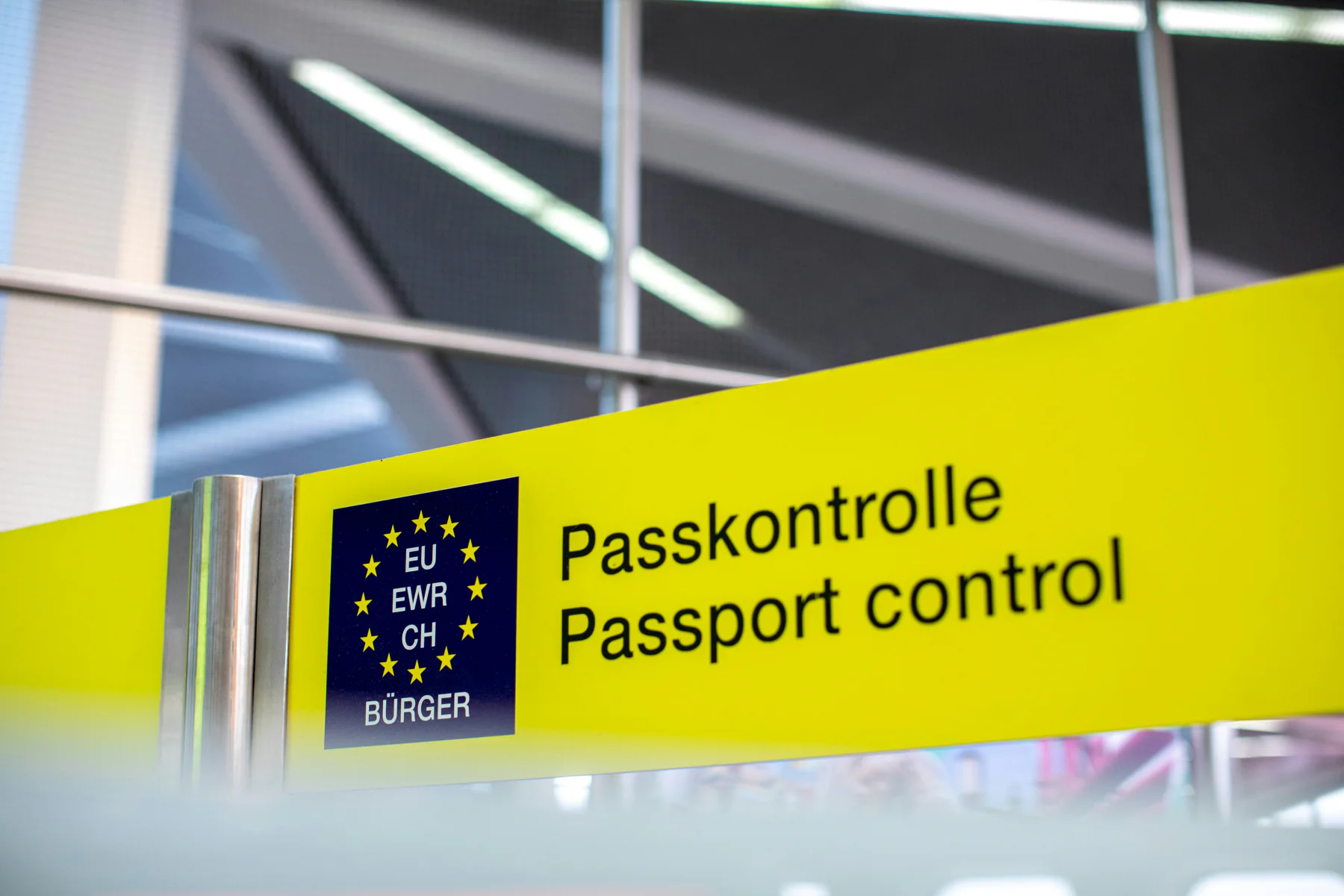
After years of delays and false starts, the EU's Entry/Exit System (EES) finally went fully operational on April 10, 2026. If you're a non-EU citizen who travels to Europe, this is the biggest change to border control in decades. And it directly affects how the 90/180-day rule gets enforced.
Let's break down what's actually changed, what to expect at the border, and what this means for how you plan your trips going forward.
So What Exactly Is EES?
EES is a digital system that automatically records every time a non-EU traveler enters or leaves the Schengen Area. It replaces the old method of a border agent physically stamping your passport. Instead, your entry and exit are logged electronically, along with your biometric data.
Think of it like a digital attendance sheet for the Schengen zone. Every time you cross a border, the system notes the date, the location, and your identity. And unlike a passport stamp that can be smudged, missed, or misread, the digital record is precise.
What Happens at the Border Now?
If this is your first time entering the Schengen Area since EES went live, expect the process to take a bit longer than usual. Here's what happens:
- Fingerprints. You'll have four fingerprints scanned. This only needs to happen once, and then your prints are stored in the system for three years.
- Facial image. A photo is taken and linked to your record. Some airports handle this at a self-service kiosk, others do it at the booth.
- Passport scan. Your travel document details are logged electronically.
On future visits, things speed up since your biometrics are already on file. You scan your passport, confirm your face, and you're through.
When you leave, your departure is recorded the same way. No more wondering whether the exit agent remembered to stamp you out.
What Happened to Passport Stamps?
For travelers registered in EES, Schengen entry and exit stamps are no longer required. Your travel history now lives in the system, not in your passport.
This is honestly an upgrade. No more running out of passport pages on a long trip. No more squinting at a faded stamp trying to figure out if it says “MAR” or “MAY.” And no more situations where a border agent forgot to stamp you and now your exit looks like an overstay.
Why This Matters for You
Here's the thing: the 90/180-day rule itself hasn't changed at all. You still get 90 days within any rolling 180-day window. What has changed, dramatically, is how that rule gets enforced.
Under the old system, enforcement was inconsistent at best. A border agent had to flip through your passport, find all the relevant stamps, and do the math manually. At busy airports, sometimes they didn't check at all. Some travelers got away with overstays simply because nobody did the count.
That's over now. EES knows exactly how many days you've spent in the Schengen Area. The system calculates your remaining days automatically and flags any issues in real time. When you show up at a Schengen border, the agent can see at a glance whether you're compliant or not.
This means a few things in practice:
- Overstays will get caught. The system flags them automatically, even short ones that might have slipped through before.
- Entry can be refused. If EES calculates that your planned stay would exceed your remaining days, you might not be allowed in. This could happen right at the gate.
- The consequences are real. Fines, entry bans to the entire Schengen Area, and problems with future visa applications. None of that has changed, but now the detection is automated.
It Hasn't Been Totally Smooth
To be fair, the first few days haven't been perfect. Reports from airports across Europe suggest longer wait times as staff and travelers adjust to the new process. Some kiosks have had technical issues. Border agents are still getting comfortable with the new workflow.
This is pretty normal for a system rollout of this scale. It covers all 29 Schengen countries simultaneously, and that's a lot of moving parts. Things will settle down, but if you're traveling in the next few weeks, give yourself a little extra time at passport control.
What About ETIAS?
You may have also heard about ETIAS, which stands for European Travel Information and Authorisation System. It's a separate thing. ETIAS is a pre-travel authorization that visa-exempt travelers (Americans, Canadians, Australians, and others) will need to apply for before their trip. Think of it like the US ESTA or Canada's eTA.
ETIAS hasn't launched yet, but now that EES is up and running, it's expected to follow. We'll cover it in a future post when there's a firm launch date.
The Bottom Line
EES is a big modernization of how Europe handles border control. For most travelers, the day-to-day experience won't change much beyond the initial biometric registration. Your trips still work the same way, and the 90/180-day rule is exactly as it was before.
The main difference is that everything is now tracked digitally instead of with ink stamps. If you're curious about how your past travel fits into the rolling 180-day window, our free Schengen calculator can show you. You can also add future trips to see how they'd look alongside your existing stays.
We'll keep covering EES developments as the system matures, and we'll have a full breakdown of ETIAS once that gets a launch date too.