
For decades, a British passport was one of the best travel documents in Europe. As an EU member, the UK gave its citizens the right to live, work, and stay anywhere in the bloc for as long as they liked. A summer in France, a winter in Spain, six months at a second home in Italy, none of it was anyone's business but yours.
That ended on January 1, 2021. Since the Brexit transition period closed, UK citizens are treated as third-country nationals, the same category as Americans, Canadians, and Australians. The practical effect is a single hard limit that now governs every trip: 90 days in any rolling 180-day period, across the entire Schengen Area combined. This guide explains exactly how that rule works for British passport holders, why second-home owners feel it most, and whether the campaigns to scrap it are likely to change anything.
The Short Answer for UK Passport Holders
If you hold a standard British passport and you are travelling as a visitor, you can spend up to 90 days inside the Schengen Area within any 180-day window. You do not need a visa for those 90 days, and from late 2026 you will also need an approved ETIAS travel authorisation to cross the border, but that does not add any days to your allowance.
Two points catch British travellers out more than any others. First, the 90 days are shared across all Schengen countries, not granted per country. Thirty days in France, thirty in Spain, and thirty in Italy uses your entire allowance. Second, both your arrival day and your departure day count as full days inside, so a Friday-to-Sunday weekend is three days, not two.
What Brexit Actually Changed
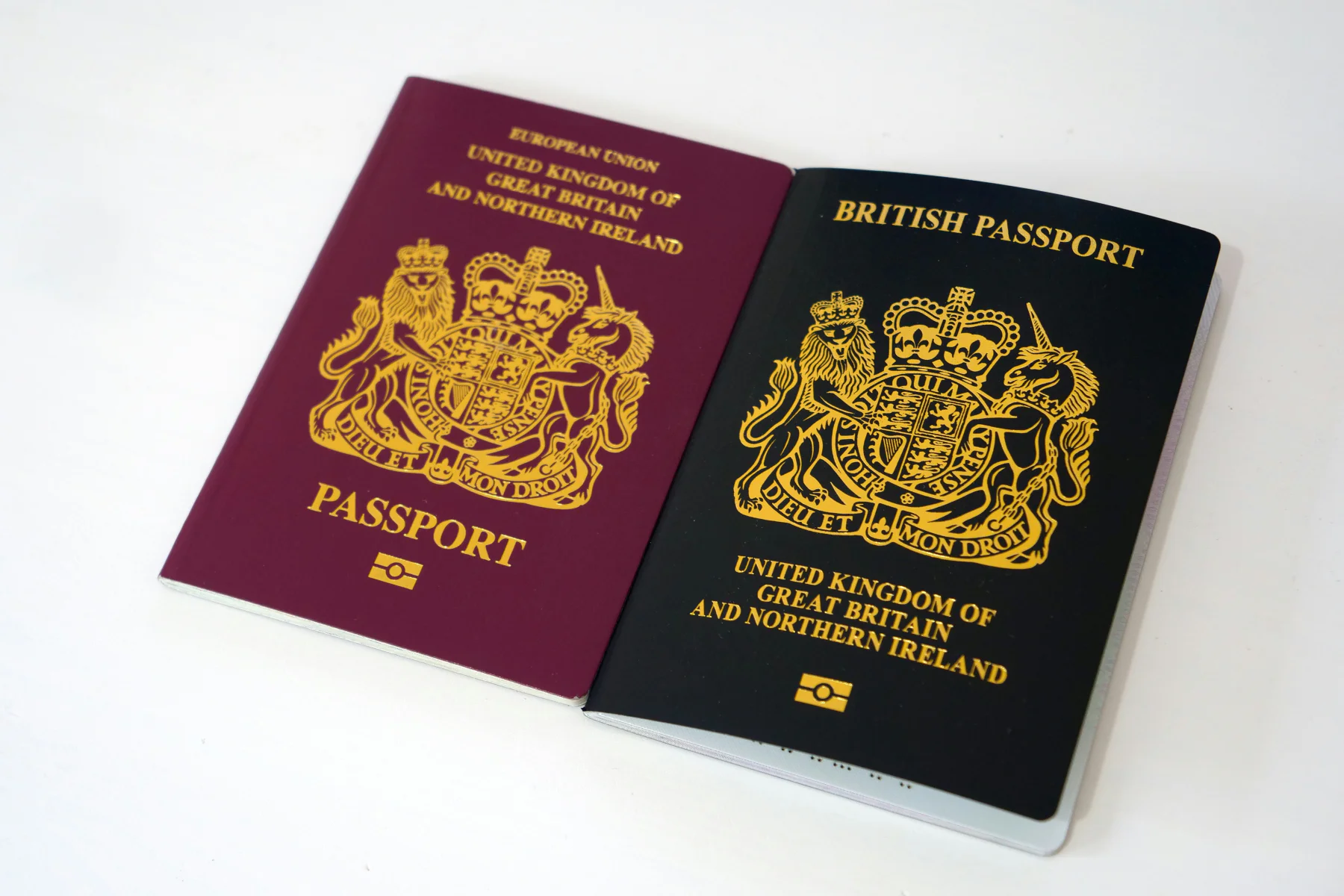
Before Brexit, free movement meant the question “how long can I stay?” simply did not exist for British citizens. There was no day count, no border calculation, and no penalty for losing track. The new burgundy and black passports in the photo above tell the whole story: the older EU passport carried free movement rights, and the newer British-only passport does not.
Under the current rules, three things changed at once. Your stays are now capped at 90 days per 180. The clock no longer resets when you move from one country to another, because the Schengen Area is treated as a single zone for counting purposes. And every entry and exit is now logged digitally through the EU's Entry/Exit System, so there is no longer any margin for a forgotten stamp or a quiet miscalculation.
How the 180-Day Window Works
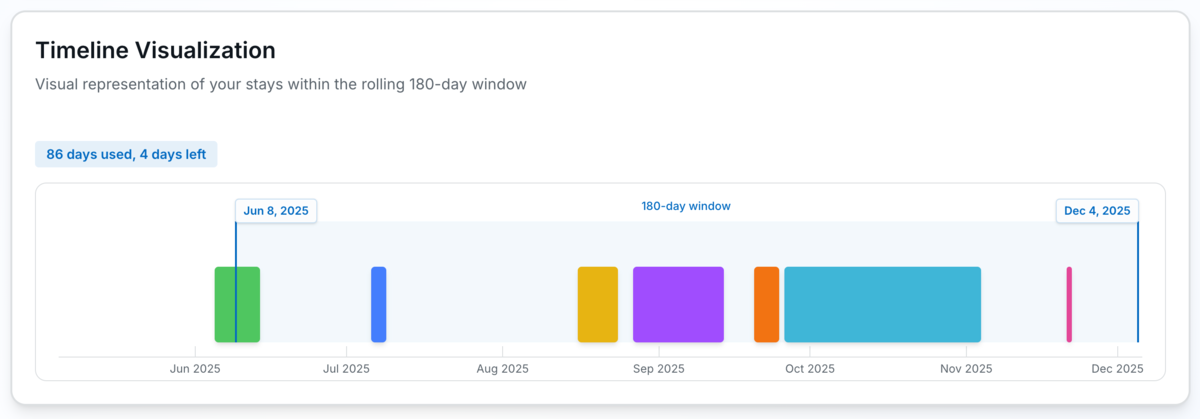
The rule is not a calendar that flips over on January 1, and it is not a fresh 90 days each time you arrive. It is a rolling window. Pick any date, usually today or the date of a trip you are planning, and look back exactly 180 days. Add up every day you spent inside the Schengen Area during that stretch. If the total is 90 or fewer, you are compliant. If it is more, you have overstayed.
Because the window always ends on the date you are checking, it slides forward one day at a time. A day you spent in Spain counts against you for 180 days, then ages out of the window and becomes available again. Nothing resets all at once. Your allowance trickles back, one day at a time, in the same order you used it. If you want the full mechanics, our guide on how the reset really works breaks it down day by day.
The Second-Home Owner Problem
Nobody feels the new rule more sharply than the hundreds of thousands of Britons who own property in France and Spain. Before Brexit, many split the year roughly in half, spending long spring and autumn stretches at the second home and returning to the UK in between. That pattern is now impossible to keep on a tourist basis.
Consider a typical example. You want to spend April and May at your house in the Dordogne, then return for September and October. April and May come to about 61 days. By the time you arrive again in September, only part of that has aged out of the rolling window, so you cannot fit two full two-month stays into the same 180 days. The 90-day cap forces you to shorten one visit, skip a year, or look at a longer-term visa.
This is exactly the friction driving the political campaigns, and it is also why counting carefully matters so much. A miscalculated return trip can turn a relaxing autumn at the house into an overstay with real consequences.
Will France or Spain Scrap the Rule?
There is genuine political movement here, which is why the question comes up so often. Both France and Spain have publicly pushed for British visitors to get more than 90 days, but it is important to separate the lobbying from the law as it stands today.
In France, a senator introduced an amendment to the 2023 immigration bill that would have given British second-home owners an automatic long-stay right. It passed the Senate with cross-party support, then was struck down by France's Constitutional Council on procedural grounds and never came into force. In Spain, the tourism ministry has openly called the 90-day limit damaging to its economy, and a grassroots “180 days campaign” is lobbying for reciprocal six-month stays, pointing out that the UK already lets Spanish and French citizens visit for up to six months.
The catch is that the 90/180 rule is set at the EU level, not by individual member states. France and Spain cannot simply opt out for one nationality, because the Schengen Area shares a single external border policy. Any real change would need agreement in Brussels, and there is no proposal on the table that would do that. The honest takeaway: the pressure is real and worth watching, but nothing has changed, and you should plan every trip around the current 90-day limit.
Legal Ways to Stay Longer Today
If 90 days is not enough, the established route is a national long-stay visa from the specific country where you want to spend the time. These sit outside the 90/180 tourist count, so a year on a French long-stay visa does not eat into the Schengen allowance you use for trips elsewhere.
- France offers a long-stay visitor visa (VLS-TS) that lets you live there for up to a year, renewable, provided you can show income and health cover and do not work locally. It is the most common solution for British second-home owners.
- Spain has a non-lucrative visa for those who can support themselves without working, plus a newer digital nomad visa for remote earners.
- Other Schengen countries have their own equivalents, many aimed at remote workers. Our 2026 digital nomad visa comparison walks through the main options and their income thresholds.
Each of these requires an application before you travel and comes with its own conditions, so check the relevant consulate's requirements well ahead of your trip.
How to Stay Compliant
For the many British travellers who simply want to make the most of their 90 days without tipping over, the answer is to count properly rather than guess. Both entry and exit days count, the window is always rolling, and the digital border now records everything, so the old habit of eyeballing passport stamps no longer works.
The simplest way to stay on the right side is to record your past stays in a Schengen calculator, then add any trip you are considering as a proposed trip before you book. You can move the reference date forward to your planned arrival and see exactly how many days you would have available on that date.
Brexit took away free movement, and no amount of lobbying has brought it back yet. What you have instead is a clear, fixed rule and a date you can always look up: 90 days in any 180, counted across the whole Schengen Area. Record your stays, check your window before you book, and your trips to Europe stay relaxing rather than risky.